Introduction: The Day I Realized My Living Room Walls Were Boring
There was a time when my living room looked perfectly fine… but something always felt missing. The couch was comfortable, the coffee table looked nice, and the rug tied the room together pretty well. But the walls? Completely empty.
And empty walls can make even a well-decorated room feel unfinished.
I remember sitting in the living room one evening thinking, “Why does this space feel so plain?” That’s when it hit me. The walls were doing absolutely nothing. They were just blank white surfaces staring back at me.
So I started experimenting with wall hangings for living room. Some ideas worked great, others didn’t look quite right, and a few things ended up being moved around several times before they felt balanced. Decorating walls is kinda like solving a puzzle.
Over time I discovered that wall hangings can completely transform the atmosphere of a room. They add personality, color, and texture without taking up floor space. And in many cases, they’re the finishing touch that pulls the entire design together.
If you’re trying to make your living room feel more inviting, these ideas might help you do exactly that.
Why Wall Hangings Matter in Living Room Design
Many people focus on furniture when decorating a living room. That makes sense, because sofas and chairs are the largest pieces in the room.
But wall décor plays an equally important role.
They Add Personality to the Space
Wall hangings reflect your taste and style. Whether it’s art, woven décor, or framed photos, what you hang on the walls tells a story about the people who live there.
I once visited a friend whose living room walls were filled with travel photography from places he had visited. Instantly the room felt personal and meaningful.
Compare that to a completely blank wall, which can feel a little cold.
They Create Visual Balance
Large furniture pieces can make walls feel empty and awkward if nothing is above them.
Wall hangings help balance the visual weight of items like:
• Sofas
• Fireplaces
• Console tables
• Entertainment centers
Once you add the right piece above a sofa, the room suddenly feels more complete. It’s a subtle change, but you definitely notice it.
Large Wall Art: A Bold Living Room Statement
One of the easiest ways to decorate a living room wall is with large statement artwork.
Oversized Canvas Art
Oversized canvas prints can make a big impact without cluttering the wall with multiple items.
A single large painting or print works beautifully above a sofa or fireplace. It acts as a focal point that naturally draws attention.
The first large canvas I bought showed a calm abstract design with neutral colors. At first I worried it might be too big for the wall, but once it was hung, the entire living room suddenly felt more polished.
Sometimes one big piece works better than several small ones.
Abstract Art for Modern Living Rooms
Abstract art is popular in modern interiors because it adds color and movement without being overly specific.
You’ll often see abstract wall hangings in:
• Contemporary living rooms
• Minimalist interiors
• Scandinavian-style spaces
Even simple shapes and brush strokes can create visual interest.
And honestly, abstract art is forgiving. If it’s slightly off-center or angled wrong during installation, most people won’t notice.
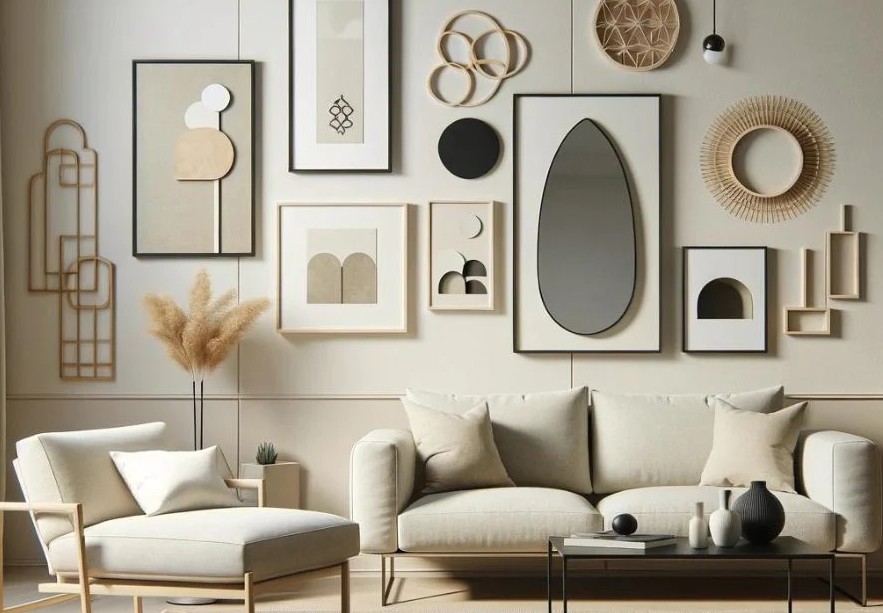
Gallery Walls: A Creative Way to Tell a Story
Gallery walls are one of my favorite decorating tricks.
They turn a blank wall into a curated collection of images and artwork.
Mix Photos, Prints, and Frames
A good gallery wall combines different elements.
For example:
• Family photos
• Art prints
• Inspirational quotes
• Travel photography
Mixing frame sizes creates a more interesting display. I tried a gallery wall once using only identical frames, and it looked… kinda stiff.
Adding variety makes the display feel more natural.
Plan the Layout Before Hanging
Here’s a mistake I made early on: hammering nails without planning the layout.
That leads to crooked frames and unnecessary wall holes.
Instead, try this approach:
1. Arrange frames on the floor first
2. Experiment with spacing
3. Take a photo of the layout
4. Then transfer the arrangement to the wall
It saves a lot of frustration later.
Textile Wall Hangings for Warmth and Texture
Not all wall décor needs to be framed art. Textiles can add warmth and softness to a living room.
Macrame Wall Hangings
Macrame became incredibly popular again in recent years.
These woven pieces add texture and a handmade feel to a space.
They work especially well in:
• Bohemian living rooms
• Coastal interiors
• Minimalist homes that need warmth
A friend once hung a large macrame piece above their couch, and it instantly softened the room’s appearance.
Woven Tapestries
Tapestries are another great option.
They’re often larger than framed art and can introduce:
• Color patterns
• Cultural designs
• Soft textile textures
One thing I like about tapestries is that they reduce the “hardness” of a room filled with wood, metal, and glass.
They make the room feel more comfortable somehow.
Decorative Mirrors as Wall Hangings
Mirrors are incredibly useful in living room design.
And no, they’re not just for checking your hair before leaving the house.
Mirrors Make Rooms Feel Bigger
A well-placed mirror reflects light and creates the illusion of a larger space.
This trick works especially well in small living rooms.
Place a decorative mirror across from a window and it will bounce natural light around the room.
The first time I tried this trick I was surprised how much brighter the space felt.
Unique Mirror Frames as Décor
Modern mirrors come in all sorts of styles.
Popular designs include:
• Sunburst mirrors
• Round minimalist mirrors
• Vintage brass frames
• Geometric mirror panels
In many cases the frame itself becomes the artwork.
Floating Shelves With Decorative Objects
Floating shelves blur the line between storage and decoration.
They’re technically shelves, but they can function like wall art.
Display Books and Decorative Items
Shelves can hold items like:
• Small sculptures
• Decorative vases
• Books
• Plants
• Framed photos
Changing these items occasionally keeps the living room looking fresh.
I sometimes rearrange shelf displays when I get bored with the room’s look.
Create Layered Visual Interest
Shelves allow you to layer objects at different heights and depths.
This layered look adds dimension to the wall, which flat artwork can’t always do.
Just be careful not to overcrowd the shelves. I made that mistake once and the whole wall looked cluttered.
Metal Wall Art for a Modern Look
Metal wall hangings are becoming increasingly popular in modern interiors.
Geometric Metal Wall Sculptures
These pieces often feature sleek lines and geometric patterns.
They work beautifully in contemporary living rooms with minimalist furniture.
Because metal reflects light slightly, it adds subtle shine to the wall.
Nature-Inspired Metal Designs
Some metal wall art features leaves, trees, or floral patterns.
These designs bring a natural element into the room without using real plants.
And unlike plants, they require absolutely no maintenance.
Which honestly is great if you’re not the best at keeping plants alive.
Common Mistakes When Choosing Wall Hangings
Decorating walls seems simple, but there are a few mistakes that can ruin the effect.
Hanging Artwork Too High
This happens a lot.
Artwork should usually be hung at eye level, roughly 57–60 inches from the floor to the center of the piece.
If art is hung too high, it disconnects visually from the furniture below it.
I’ve done this before and the room immediately felt awkward.
Choosing Pieces That Are Too Small
Tiny artwork on a large wall looks out of place.
For example, artwork above a sofa should typically be about two-thirds the width of the sofa.
Otherwise the wall still feels empty.
Final Thoughts: Turning Blank Walls Into Beautiful Spaces
Decorating living room walls doesn’t require a huge budget or professional design skills.
Sometimes a single piece of artwork can completely change the feel of the room.
Other times it’s a combination of elements—photos, mirrors, textiles, or shelves—that bring the space to life.
The key is experimenting until the room feels balanced and personal.
And honestly, it might take a few tries to get it right. I’ve moved artwork around my living room more times than I can count.
But once the walls finally come together, the room feels finished. Comfortable. Like a place where people actually want to sit down and stay for a while.
And that’s really the goal of a great living room.